This is kind of a variation on the Royale With Cheese Movie Club, the blog category where I review movies that everybody else has seen – except me. The category title comes from my FINALLY seeing Pulp Fiction 20 years after everyone else saw it.
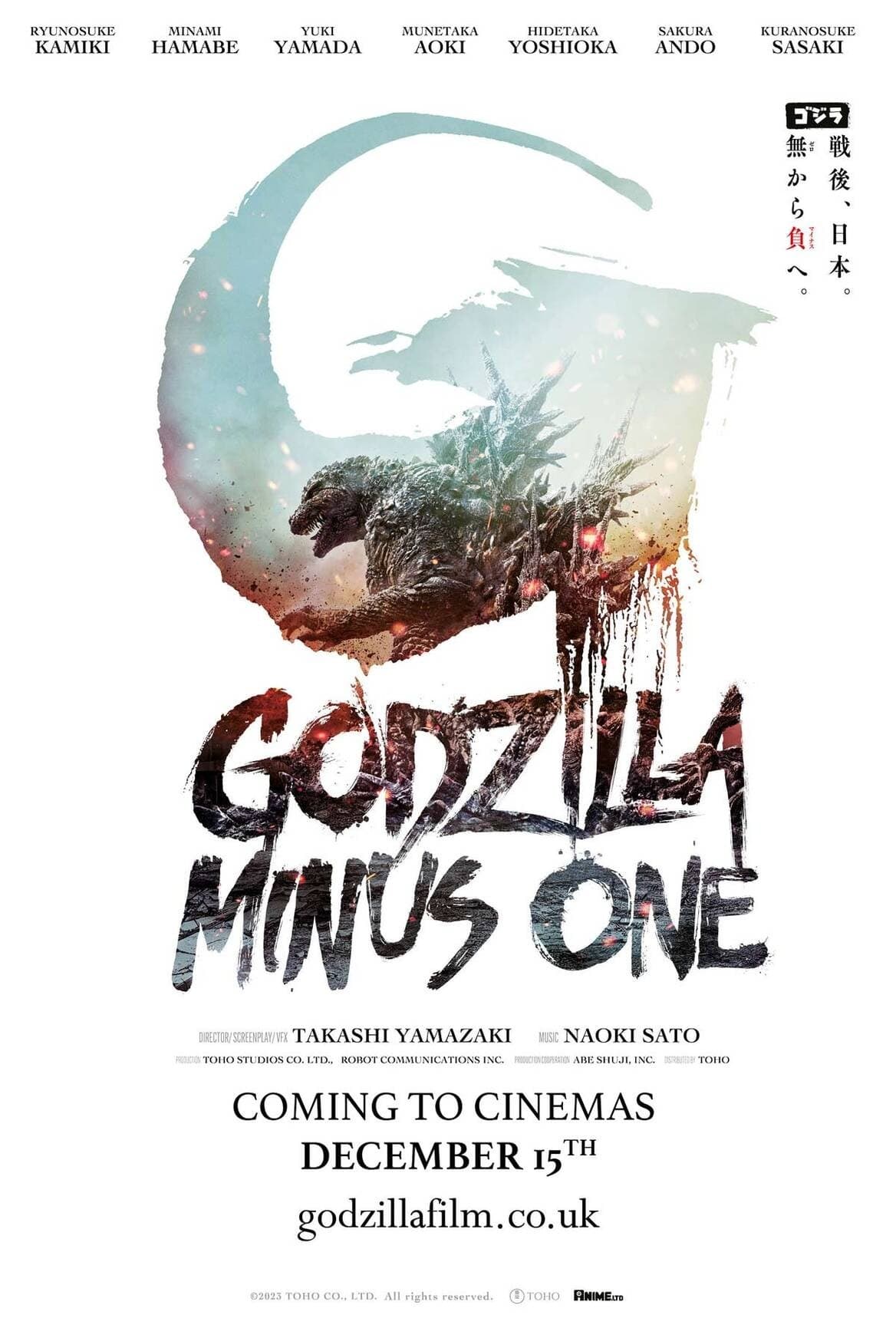
But this time, the only reason I didn’t see this film when it originally came out was because I was in the hospital with foot surgery, and by the time I finally got out of the hospital and finished up my personal home therapy, Godzilla Minus One finished its theatrical run.
Okay, I figured I’d see it at a second-run theater and be happy with ti. But no. Because Godzilla’s Japanese studio has a working agreement with the American studio Legendary Pictures, Godzilla Minus One had to leave the theaters when Godzilla x Kong debuted. Plain and simple – you couldn’t have a Japanese Godzilla movie and an American Godzilla movie released in the same calendar year.
Meanwhile, as Godzilla Minus One left the theaters, the film actually picked up an Academy Award – the first-ever for a Godzilla film – for Best Special Effects. That just goes to show you that if you hang around in the movies long enough, you too can earn an Oscar. 😀
Yesterday, while tooling around Netflix, I discovered that the video streaming service had acquired the rights to show Godzilla Minus One, and … well, this is a good a time as any to watch this.
And I’ll just say this … I’m SORRY I didn’t see this in theaters the first time.
Trust me, this is not your stereotypical “guy in rubber lizard kaiju suit stomps through miniature recreation of Tokyo” Godzilla film. This film is freakin’ intense.
First thing. The special effects in Godzilla Minus One are deserving of their Oscar win. They amplify the menace of Godzilla’s brutal terror and rage, whether in the seas or whether he’s terrorizing Ginza. We see Godzilla as the embodiment of nuclear holocaust and terror, a theme that permeates the earliest 1950’s-era Godzilla movies before the films devolved into kitschy children’s stories in the 1970’s.
There’s also a heart-wrenching subplot involving our main human character – a kamikaze pilot who battles Godzilla while also battling his own war-infused shell shock and post-traumatic distress order, while he still tries to take care of others in a refugee village. It’s just heartbreaking and it adds more emotion to the story.
The film’s main theme – in fact, the main theme of good Godzilla movies – is that Godzilla is the embodiment of nuclear war, the physical manifestation of the atomic bombs that hit Hiroshima and Nagasaki in World War II. Godzilla is that allegorical destruction of Japan, in the same way that South Korean cinema has that underlying paranoia and terror of their northern neighbors with a crazed despot and a nuclear arsenal at his disposal.
Yeah, I’m finally glad I had the chance to see this film. Only took me several months. But here we are. Now bring on Godzilla Minus One 2. I mean, that’s got to be the sequel title, right?

 Chuck The Writer
You must be logged in to post a comment.